PCB Manufacturers Can Assist With Product Scaling
The PCB manufacturing process is an incredibly intricate one. Each step requires specialised machinery and strict quality control to prevent errors and short circuits. With so many moving parts, the process can be challenging for manufacturers who want to scale their production without compromising on quality. Fortunately, PCB manufactures can help with this process. They can help with a variety of production challenges by providing custom solutions that meet the needs of your project. These solutions can range from altering board sizes, layer counts, and even incorporating unique features.
As a result, it’s important to choose a supplier who can offer comprehensive product scaling services, from design through to assembly. Choosing a single manufacturer can also help streamline your supply chain by allowing you to manage delivery dates, track progress, and address any issues with the supply of components.
One of the most common production hurdles that pcb manufactures must overcome is the change from prototype to mass production. This often involves modifying the original design to account for changes in material requirements, cost constraints, and manufacturing processes. Using a pcb manufactures that specialise in both prototype and mass production will ensure that these modifications are handled effectively, and will not interfere with the integrity of your finished product.
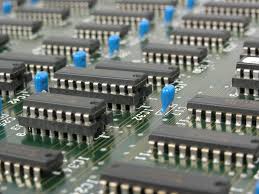
How PCB Manufacturers Can Assist With Product Scaling
Contract manufacturers (CMs) have extensive experience in managing the transition from prototype to mass production, and will work closely with you to understand your needs and timelines. They can apply DFM (design for manufacturing) principles, helping you optimize your PCB design for large-scale fabrication. They can also help reduce your per-board cost by reevaluating the layout and eliminating features that don’t contribute to the functional capabilities of your final product.
Artwork scaling is a common concern for high-volume production. This is due to the fact that internal layers of FR4 multilayer PCBs lose some mass during the heat lamination process, meaning that they need to be scaled up by known percentages in order to maintain their size. A capable CM will scale-up artwork to reflect this, and make sure that they are able to build your board to its full dimensions when they are fabricated.
Using a fabricator that fabricates and assembles your PCBs under one roof can simplify the manufacturing process, reducing costs and eliminating the risk of mistakes. Additionally, a CM will be familiar with your project and its file formats, ensuring that no information is lost during the transition from prototype to mass production.
By establishing a long-term relationship with a fabricator, you can establish a good working partnership and avoid any miscommunications that could lead to costly errors. This can also help to speed up the manufacturing process, as it will be easier for both parties to work together. For example, the CM will be familiar with your preferred communication protocol and will be used to communicating with you in this way. They will also be aware of your preferred PCB materials, reducing the time needed to source new components and minimizing downtime.