TikTok API handle large datasets
In the modern digital landscape, businesses and developers increasingly rely on social media platforms for insights, trends, and analytics. TikTok, with its explosive global growth, has become a key source of user engagement data, making efficient data handling a priority for marketers, agencies, and analytics platforms. One of the questions that arises when working with TikTok is whether the Tiktok API can handle large datasets, particularly for applications that require extensive data collection and real-time processing. Understanding the API’s capabilities in this regard is essential for designing scalable and reliable solutions.
The Tiktok API is structured to provide developers with controlled and secure access to platform data, allowing them to retrieve information about videos, user engagement, comments, and more. While it is not designed for unrestricted bulk downloads, it does include mechanisms for working with large datasets efficiently. One of the key features that enables this is pagination. Pagination allows developers to request data in manageable chunks, ensuring that large volumes of information can be collected incrementally without overwhelming the API or the developer’s infrastructure. By iterating through these pages programmatically, applications can process extensive datasets while adhering to the API’s rate limits.
Rate limiting is another factor to consider when handling large datasets with the Tiktok API. The platform enforces restrictions on the number of API calls that can be made within a given timeframe to maintain stability and prevent abuse. While this may initially seem like a limitation, it encourages developers to design scalable and efficient systems. Techniques such as request batching, caching, and asynchronous processing can help manage these limits while collecting large datasets over time. Properly implemented, these strategies allow businesses to access comprehensive data without violating TikTok’s policies or overloading servers.
The Tiktok API also supports structured data retrieval, which is particularly beneficial when managing large datasets. Data is typically returned in standardized formats such as JSON, making it easier to process, store, and analyze. Developers can integrate this structured data directly into analytics pipelines, dashboards, or databases. Whether tracking performance metrics across thousands of videos or aggregating engagement statistics for multiple accounts, the consistent formatting of API responses simplifies the management of large datasets and reduces the risk of errors during processing.
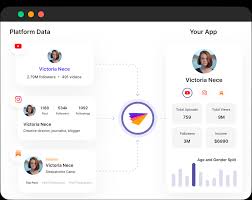
Can the TikTok API handle large datasets?
For enterprise-level applications, the Tiktok API can be integrated with cloud computing resources to handle extensive datasets effectively. By leveraging scalable storage and computing services, developers can run batch processing jobs, parallelize data collection, and maintain real-time analytics dashboards. Combining the Tiktok API with cloud infrastructure ensures that large volumes of data can be ingested and processed efficiently, enabling advanced analytics such as trend detection, influencer performance monitoring, and campaign optimization.
It is also worth noting that the Tiktok API’s limitations on sensitive data and private accounts do not hinder the handling of large datasets in general. Even though personal data and private content are restricted for privacy reasons, developers can still access significant volumes of public content and engagement metrics. By focusing on available endpoints such as video statistics, comment counts, and user engagement summaries, organizations can build comprehensive datasets that support informed business decisions and strategic insights.
Another advantage of the Tiktok API for large-scale data management is its ability to support programmatic automation. Scripts, workflows, or applications can be configured to make sequential API calls, store results, and process information continuously over time. This automation enables the collection of large datasets without manual intervention, making it feasible to track evolving trends, monitor performance, and maintain updated analytics over weeks or months.
In conclusion, the Tiktok API is capable of handling large datasets effectively, provided developers work within the platform’s rate limits and design scalable data processing workflows. Pagination, structured responses, and support for programmatic automation make it possible to collect and analyze significant volumes of data. While the API does impose restrictions on private information and sensitive personal data, these measures do not prevent the aggregation of meaningful public insights. By combining the Tiktok API with best practices in data handling and cloud infrastructure, businesses and developers can manage large datasets efficiently, enabling data-driven strategies, informed decision-making, and optimized engagement on TikTok.