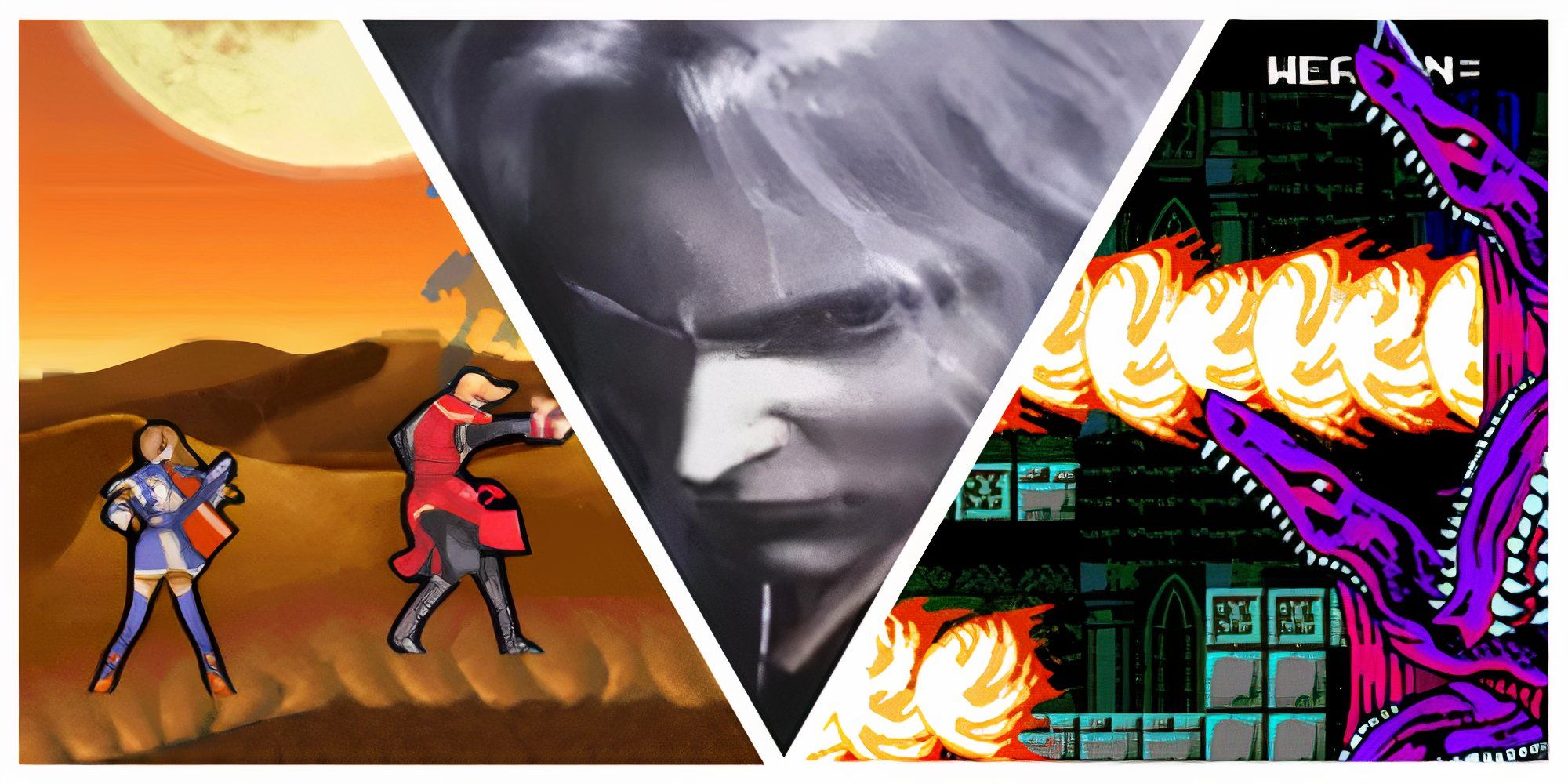

Koji Igarashi. Just seeing that name instantly brings his vast body of work to mind. While the talented producer is known for more than just Castlevania, most gamers think of him when they think of whipping at hordes of undead monstrosities in dark castles.
Although no longer officially associated with Konami’s incredibly popular series, Mr. Igarashi has contributed to several amazing adventures over the years. Our goal is to cover every single one where he at least played a major role in the process, such as producer or script writer.
Related
Castlevania: Nocturne’s New Season 2 Trailer Reminds Us Why It’s The Best Anime On Netflix
Castlevania: Nocturne’s second season looks like it’s going to be as excellent as the rest of the series. Here’s why.
So here it is, Castlevania fans: our epic ranking of every Igavania game that has been published. Some good, some bad, some just weird, but all worthy of the name Koji Igarashi.
Though the vast majority of the games included are from the Castlevania series, we’ve also included some other entries that are very much inspired by Castlevania. Every single game listed here was courtesy of Koji Igarashi.
15 Castlevania: Harmony of Despair
Fan Fiction

|
Platform |
PS3, Xbox One, Xbox 360 |
|---|---|
|
Publisher |
Konami |
|
Genre |
Multiplayer, Action Adventure |
|
Release Date |
August 4th, 2010 |
On paper, Castlevania: Harmony of Despair made perfect sense. It finally lets us fans play as some of our favorite characters along with our friends, both online and locally. We could have Shanoa team up with Soma Cruz, Richter Belmont, and Alucard.
The problems with the game were mostly from how grindy it was, how annoying solo runs were, and the frustration of having to fight against the clock with arbitrary time limits.
While it was conceptually neat to have a procedurally generated adventure, it resulted in pretty barebones environments and an overall lack of the awe-inspiring themes traditionally explored by the series.
14 Castlevania Judgment
Ready? FIGHT!


- Released
- November 18, 2008
- Engine
- Dolphin Emulator
- ESRB
- t
- How Long To Beat
- 9 hours
I’m probably in the minority here, but I didn’t hate Castlevania Judgment. Sure, it’s nothing close to a critical darling, and as a fighting game, it’s perhaps lacking.
Despite its flaws, Judgement was also a great-looking Castlevania adventure that was admirably trying something new (which is more than I could say for Harmony of Despair).
Like most fighting games, Judgment has a convoluted and somewhat silly plot. But it also lets us play as some iconic characters, including classics Simon and Grant, villains like Death and Dracula, and even newcomers like Aeon. Each character had unique moves and a distinct and pretty fresh visual hook.
Perhaps the most compelling part of the game, other than the Story, Arcade, and Versus modes, was slashing your way through Castle Mode.
Ultimately the game was held back by balance issues, on top of being a Wii exclusive. But if you’re a diehard fan of the series, you’ll find something to enjoy here.
13 Castlevania Chronicles
Fresh Blood for Akumajō Dracula


- Released
- July 23, 1993
- ESRB
- t
While many of us associate Koji Igarashi with the Metroidvania adventures, that’s not all he had a hand in.
In his time he oversaw some remakes of classic Castlevania adventures, including Castlevania Chronicles. It took the original home computer Akumajō Dracula and remade it for the PlayStation.

Related
Castlevania: 10 Most Powerful Belmont Characters, Ranked
Every Belmont descendant gets stronger, but so does Dracula. Here are the 10 most powerful Belmont characters ranked.
Chronicles catered to fans of the old games with Original mode but also helped make things more palatable to modern gamers with Arrange mode. Either way, though, this is very much in the style of old Castlevania games: brutal and unforgiving in its difficulty.
Though other new additions such as improved graphics and a new introduction sequence were fun, ultimately this wasn’t the most popular of the Castlevania remakes. Nor the best that Koji Igarashi was capable of.
12 Castlevania: Curse of Darkness
Cursed Devil Forgemaster


- Released
- November 1, 2005
- ESRB
- M For Mature 17+ Due To Blood, Violence
The 3D Castlevania games get a lot of hate, and most of it is pretty well deserved. Though I’ll note that if you’ve watched and enjoyed the first Castlevania Netflix series, almost all of the main characters are featured in Curse of Darkness. Especially Hector, the Devil Forgemaster.
Hector and Dracula are on the outs, and he’s trying to live a simple, human life. Then some imbecilic villagers decide to burn his fiancee at the stake as a witch. And wouldn’t you know it, his rival Isaac, who’s still loyal to the vampire in charge, was behind it all. So it’s back to the Abandoned Castle for a little spot of revenge.
What helps differentiate this game from others is Hector’s ability to forge and use Innocent Devils as familiars. He’ll also gain a variety of new abilities over time, and fight some challenging bosses. Not a bad adventure, but far from the best.
11 Castlevania: Lament of Innocence
Leon’s Journey

- Released
- October 21, 2003
- ESRB
- rp
- Platform(s)
- PS2, PS3
- Engine
- unity
- How Long To Beat
- 8 Hours
While Curse of Darkness did an admirable job transitioning to the 3D environment, in many ways, Lament of Innocence was the most impressive, at least before they decided to copy God of War in the Lords of Shadow games.
In many ways, this is the closest we’ve gotten to the SOTN experience in a 3D format. It features a lot of wandering around, fighting epic and noteworthy bosses, and whipping everything good.
What really helped with the replay value was two unlockable characters, Pumpkin and Joachim, who both play very differently from Leon. A pretty enjoyable origin story for the iconic series.
10 Castlevania: Harmony of Dissonance
Juste Beautiful

- Released
- September 16, 2002
- ESRB
- t
After Symphony of the Night captivated the interest of so many, we suffered many lean years of mediocre follow-ups. Even though Harmony of Dissonance isn’t the most fun Metroidvania to play, it was undeniably gorgeous when it first came out.
This was an incredibly colorful adventure that frankly took the GBA to its very graphical limits. The enemy models were large and complex, there was fun use of shadows, and there were even some fun nods to popular bosses in wild new forms.
Additionally, the story of the game was interesting, with the twisted nuances of Juste and Maxim’s friendship explored in fun ways.
Ultimately, the biggest problem with the game is it feels like all the resources went into the visual presentation. This was a super easy and somewhat boring adventure, at least for hardcore fans.
9 Castlevania: Portrait of Ruin
Double the Heroes, Double the Fun

- Released
- December 5, 2006
- ESRB
- m
- Engine
- mercury engine
- How Long To Beat
- 10 Hours
If I were to write this list purely on emotions, Portrait of Ruin would be much higher up. It was fun, ambitious, and a real celebration of the series’ 20th anniversary. That said, when scrutinized against the other games in a critical context, it has to sit a bit lower down.
Not only did Portrait of Ruin feature a twisted vampire nemesis that could draw new worlds into existence on canvas, but it also had you alternate between two different heroes, Jonathan and Charlotte.

Related
Castlevania: Curse Of Darkness Was The ‘3D Symphony’ That Everyone Forgot
The closest thing we ever got to a 3D Igavania.
Not only did this allow the powerful Dual Crush team to attack, but each of them learned new abilities and attacks. There are even plentiful additional modes to play through, each of which plays very differently.
Perhaps my favorite aspect of this game was how creative it was, from the level design to the boss battles. Especially the final battle against the true final boss. I won’t spoil it, other than to say it’s one of my favorite in the entire series, and a truly epic tag team.
8 Bloodstained: Ritual of the Night
Inexact Alchemy

As both a fan of Castlevania and crowdfunding, let’s just say I went a little insane when I decided to back Bloodstained: Ritual of the Night. Mostly this was thanks to Konami starving fans of new entries for so long, but it was also a vote of confidence in Igarashi’s vision.
Sadly, that vision was more than a bit more muddled, at least in the Nintendo Switch version of the game.
While Bloodstained was undeniably visually compelling and featured many features fans have come to expect from Igarashi, the balance and inconsistent framerate made it harder to love.
That said, I’m still happy that not only was the game made, but that it garnered such a huge reception from fellow fans. If nothing else, that helps to show there’s still a hunger for this sort of Gothic adventure out there. Next time, maybe we’ll get one that meets our highest standards.
7 Bloodstained: Curse of the Moon
The Perfect Retro Bite

It might seem weird that Bloodstained: Curse of the Moon is rated higher than Ritual of the Night, but there’s good reason for that. While Ritual of the Night was highly ambitious yet somewhat flawed, I’d argue Curse of the Moon was pitch-perfect.
The game was Castlevania III with Bloodstained characters. And while the NES visual aesthetic might alienate some, I found it utterly spellbinding.
Throw in great platforming, outstanding boss battles, and a balanced yet fair difficulty, and you might start to see why it’s held in higher esteem.
Just don’t expect this adventure to make your life easy, because it will absolutely force you to memorize every attack pattern and have flawless timing.
6 Castlevania: Aria of Sorrow
Japan is the Future

Although I loved the premise of Aria of Sorrow from the first time I played it, I didn’t grow to love the game until replaying it many years later.
Soma Cruz’s mystery tour, along with the devastating revelations at the end of the game, still made it a more than worthy contender.
Absorbing monster souls and using them as weapons was just neat. The problem was, that the process was incredibly grindy and time-consuming. That said, the game featured some neat bosses and fascinating supporting characters.
Thankfully for all of us, Aria of Sorrow did just well enough that it later spawned a far superior sequel, as well as a truly fascinating spiritual successor of sorts.
5 Bloodstained Curse of the Moon 2
Wonderful Lunacy

As much as I adore Bloodstained: Curse of the Moon, Curse of the Moon 2 is superior in every conceivable way.
It’s packed with different scenarios, adds new playable characters (including a dog in a mech suit) on top of the original team, and has a lush art style and epic boss battles that have become a staple of titles Inti Creates has a hand in.

Related
Castlevania: 10 Best Castles In The Series, Ranked
Castlevania is famous for its tough enemies, varied levels, and elaborate castles. This list breaks down the very best castles featured in the games.
Thankfully the story is by Iga, which makes it twisty, fun, and unpredictable. In many ways, Curse of the Moon 2 was more of a Metroidvania than the original game, and it did a good job of streamlining the exploration.
Perhaps the best aspect, however, is that you can play Curse of the Moon 2 with a friend locally in co-op. Just the thing for helping introduce new players to this style of hardcore, retro gameplay.
4 Castlevania: The Dracula X Chronicles
Best Reason to Still Own a PSP

- Released
- October 23, 2007
- ESRB
- t
- Multiplayer
- Local Multiplayer
- Engine
- Super CD-ROM²
- How Long To Beat
- 5 hours
One of the iconic Castlevania games that not every fan has had the privilege of playing was the original Rondo of Blood. Thankfully, The Dracula X Chronicles make it easy to experience the adventure.
Better yet, this PSP collection features cool remastered graphics, stunning cinematics, and plenty of unlockable content. This ranges from music tracks to the original Rondo of Blood and even a portable version of Symphony of the Night!
Throw in the standby features such as a Boss Rush and a rocking soundtrack, and this is an amazing portable collection and a reminder of why the series is so beloved to this day.
3 Castlevania: Dawn of Sorrow
Don’t Cry, Soma…

- Released
- October 4, 2005
- ESRB
- t
- Multiplayer
- Local Multiplayer
- Engine
- game engine
- How Long To Beat
- 10 Hours
Whereas Aria of Sorrow took a while to make me a fan, Dawn of Sorrow was far more streamlined and impressive.
This sequel got us invested in the latest demented cult trying to resurrect Dracula, including newcomers Dario and Dmitrii.
The Tactical Soul system was improved here and made far less grindy. Perhaps the weirdest new entry was using your DS stylus to draw sigils to “seal” bosses, lest they break free and attack endlessly.
While the lore of Soma’s adventure and the tantalizing untold story of what happened in 1999 never saw the light of day, the Sorrow games were perfect examples of Igarashi’s willingness to explore unique stories and iterate on old ideas.
2 Castlevania: Order of Ecclesia
The Third Sorrow Game

- Released
- October 21, 2008
- ESRB
- t
- Engine
- Glyph System
- How Long To Beat
- 10 Hours
The DS era was a great time to be a Castlevania fan. While it’s sad that it ended with Order of Ecclesia, it’s always better to go out with a bang. Although this entry wasn’t officially part of Soma’s story, in many ways it felt like a spiritual successor.
Much like Soma, Shanoa’s story is a complex one, and a tale that only gets fully explained with the best ending. Also like the Sorrow games, Shanoa uses enemy powers herself in the Glyph system.
Where she differs quite a bit is her ability to rapidly dual wield using Glyphs on both arms, as well as her back.
This entry also took place in more than just one solitary castle. Shanoa goes all over the map fighting monsters, though eventually, she does wind up in a very familiar place fighting horrifying monsters.
The best part of the game, though, was the incredible boss battles in Order of Ecclesia. In many ways, this entry was almost a Soulslike and featured brutal, over-the-top bosses that required all your reflexes and strategy to survive.
1 Castlevania: Symphony of the Night
A Miserable Little Pile of Secrets

- Released
- October 2, 1997
- ESRB
- T For Teen Due To Animated Blood and Gore, Animated Violence
- How Long To Beat
- 9 Hours
Symphony of the Night was a seminal game for me. It’s one of those postmarks I can point to where the course of my life changed, and I suddenly became a huge fan of Castlevania and Metroidvanias in general.
Everything about the game instills a sense of wonder, from the gorgeous environments and spectacular enemy design, but mostly the music. This game lived up to its name and features an orchestral wonder of a soundtrack. There are no boring or pointless songs here, each one sets the tone and does so masterfully.
While some fans complain about the lack of difficulty in Symphony of the Night, I find that only makes it more fun to replay, especially on my PSP in the Dracula X Chronicles.
This isn’t just a great Castlevania game; it’s one of the very best. It’s a game I recommend every gamer plays at least once. Now here’s hoping one day Konami realizes what a gold mine they’re sitting on, and considers giving us new adventures to enjoy.

Next
Bloodstained: Ritual of the Night Interview — Koji Igarashi on Being the Face and Name of a Genre
During E3 2017, we were able to sit down with legendary game developer Koji Igarashi to discuss modern game development and the current build of Bloodstained: Ritual of the Night.