Can pcb circuit board be used
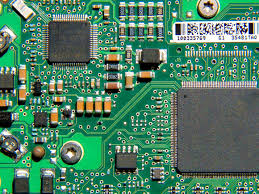
Printed circuit boards, or PCBs, are essential to the operation of many electronic devices. They allow electrical signals to travel between components and help ensure that the devices work properly. PCBs can be made of different materials, but the most common is copper foil. These thin layers of copper are patterned with conductive lines that connect parts to one another. The metal is also covered with protective materials, including a soldermask layer that gives the circuit board its green (or red at SparkFun) color and helps to insulate the copper from other metal, solder, or conductive bits.
PCBs come in a wide variety of shapes and sizes. Some are single-sided, with components mounted on only one surface of the circuit board. Others are double-sided, with conductors on both surfaces of the board. Some are multi-layer, with internal conductive plane layers that carry signals between components.
Older PCBs looked a lot like the system shown above, with copper traces running on the bottom side of the board and through-holes holding heavy metal components. These posed a number of problems: components were expensive, wired connections could easily get tangled or brittle, and debugging was difficult. Newer pcb circuit board are much more reliable, smaller, and less expensive to make than their predecessors.
Can pcb circuit board be used in stretchable batteries?
The first step in creating a PCB is to create a base, called the substrate. This is usually made from fiberglass, but it can be substituted with other materials if necessary. A layer of copper is then etched to form the conductive lines on the board. The copper is plated with nickel and gold to prevent corrosion, then coated with an epoxy to insulate the copper from the rest of the board. Finally, the soldermask layer is applied to protect the copper from accidental contact with other metals and to make it easier to solder connections to the board.
A flex PCB is the perfect solution for battery systems that need to be flexible and compact, such as portable electronics. The flex PCB can be bent and twisted to fit the battery’s shape, making it easy to power your favorite electronic devices.
Recently, researchers from the Pohang University of Science and Technology have developed a stretchable PCB made from a material called soft anisotropic conductive film (S-ACF). The S-ACF is created by patterning metal particles in a copolymer that has both elastomeric and metallic properties. They have found that the S-ACF can be bonded to rigid sections of the PCB and interfaced with it to create conductivity between the two sections. They have also demonstrated that the S-ACF can be stretched by up to 200% without a loss of functionality or reliability. This is an important advance in the development of flexible and stretchable batteries for use in portable electronic devices. The technology could also be used to develop wearable electronic devices that can be worn on the body, such as heart monitors or medical devices. These devices will need to be able to fit into a small space and be able to conform to the contours of the human body.