Flexible Printed Circuit Manufacturers Support Design Processes
Printed circuit boards (PCBs) are the foundation of electronic devices, and flexible printed circuit manufacturers play a critical role in helping you turn your design into a working product. FPCs allow for creative arrangements of components and connectors that wouldn’t be possible with rigid PCBs, enabling your device to be more functional, user-friendly, and aesthetically pleasing. For example, flexible PCBs allow for a foldable smartphone with dual displays that fit comfortably in the user’s hand or pocket, as well as a curved display for a fitness tracker optimized to the wrist contour.
Flex PCBs are made from the same materials and fabrication methods as rigid PCBs, and there are four primary stages of production for these types of circuits. Flexible PCBs start with the base material, typically FR4 or Rogers 4003—a type of polyimide. The copper layers are then deposited on the base material with a buildup process. They are then patterned and etched to create the circuit patterns and conductive pathways that carry electrical signals.
Next, the flexible printed circuit manufacturers is given a dielectric layer to protect the copper traces from corrosion and extend its life. This layer is commonly known as the coverlay. It’s important that a flexible circuit manufacturer uses an adequate amount of coverlay, but it’s also vital that this layer is thin enough to prevent interference with signal transmission and performance.
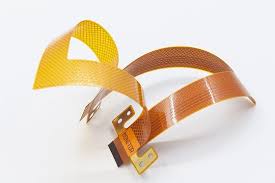
How Flexible Printed Circuit Manufacturers Support Design Processes
Once the insulator layer is applied, the circuit board is given a solder mask to prevent accidental contact with components and traces. It’s essential that your flex circuit manufacturer uses the proper amount of solder mask to avoid any issues with the connections.
For flex circuits with high component density or requiring more rigid sections, stiffener layers are sometimes used. These layers are often made of FR4 and strategically placed in non-flexing areas to support the structure and prevent excessive bending.
The final step in flex circuit manufacturing is lamination, which involves bonding the coverlayers and stiffeners to the copper traces. Then, vias are metalized through an electroless plating process to establish the connections between layers and to enhance solderability. During this stage, the traces are tested for functionality under simulated real-world flexing conditions.
In order to ensure the best results with your flex circuits, it’s essential that you work with experienced manufacturers with proven processes and quality control systems in place. This will help you ensure that your final products are of the highest quality and meet all applicable industry standards. When it comes to a reliable flexible printed circuit manufacturer, you can trust the experts at AltiumPCB. Contact us today to learn more about our services and to get started with your next project.