Risk Appetite in Governance Risk Compliance
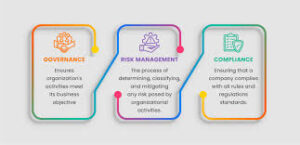
The risk appetite concept is central to enterprise risk management, and governance risk compliance (GRC) depends on it. GRC is the set of processes and structures that enable an organization to achieve objectives, address uncertainty and act with integrity — it includes processes for the allocation of responsibilities, rights and rewards across internal and external stakeholders; procedures for reconciling competing interests; and structures for oversight and control.
The development of a comprehensive risk appetite framework is vital to grc governance risk compliance, and it should involve all key stakeholders in an organization. This ensures that all employees are aware of the boundaries within which their actions may be taken, and that their decision-making is guided by the framework. In addition, it enables the company to identify and understand risks that are unique to its business and industry.
Developing a risk appetite statement should be a collaborative process, with clear accountabilities for each stakeholder identified and communicated. For example, the process of defining risk appetite should not be solely a function of the risk management team, but rather should include representatives from all key areas of the business, as well as external parties such as regulators and major clients.
The Role of Risk Appetite in Governance Risk Compliance
A good way to develop a risk appetite statement is through the use of a risk matrix, which can be used to visually represent the levels of tolerance or appetite for a number of principal risks that the organization might face. Typically, the risks that present the most significant impact should be placed closer to the top of the matrix, where a higher level of tolerance or appetite may be appropriate. The bottom of the matrix, on the other hand, should be reserved for those risks that the organisation has a low or no appetite for taking.
In determining its risk appetite, an organization must consider many different factors, such as its culture, strategic objectives and financial position. For instance, a software development company grc governance risk compliance may have a high risk appetite for innovation and new product development but be very cautious when it comes to reputational or monetary loss.
As with any document, it is important to review the risk appetite statement regularly to ensure that it remains relevant and up-to-date. This will require an analysis of the changing business environment, as well as changes in regulation and the risk landscape. It’s also important to regularly communicate the statement to all employees and external parties to ensure that everyone is clear on its meaning, as well as how their decisions should be influenced by it.
Having a robust risk management system in place will help to support governance risk compliance, and Workiva offers an easy-to-use platform that allows users to create, revise and publish their risk appetite statements in a way that is accessible and visible to colleagues across the agency. This helps to increase transparency and foster collaboration, while ensuring that the risk appetite framework is embedded in all policies and operational practices.