
“A delayed game is eventually good, a bad game is bad forever” is a quote we often hear when a game releases in a pitiful state or is rushed to market.
While the sentiment remains relevant to this day, the wide availability of the internet now allows developers to fix a game after launch.
Related
12 Bad Games In Amazing Franchises
There are usually a few major flops among all our favorite franchises. So here are some not-so-great titles from otherwise amazing gaming series.
Ideally, developers would have the luxury of taking all the time they need to perfect a game before release. Unfortunately, that isn’t always possible.
While some games remain broken, there are instances where studios transform a doomed title into a success through sheer determination and countless updates. In this list, we highlight 10 of the best redemption arcs in gaming.
10 Street Fighter V
Picked Up From the Street

Street Fighter V


- Released
- February 16, 2016
- Engine
- Unreal Engine 4
- ESRB
- m
- Platforms That Support Crossplay
- PC, PS4 & PS5
- PS Plus Availability
- Extra & Premium
- OpenCritic Rating
- Strong
When Street Fighter V first launched, the general consensus was that it was underwhelming—and that’s to put it mildly. The game was functional, but it lacked many features that fans expect from a fighting game of its caliber.
At launch, the roster consisted of only 16 characters fighting on a limited number of maps. There was no single-player campaign—only brief individual character stories—and, most notably, the game was missing an Arcade mode. Fans quickly voiced their disappointment.
In the following months, Capcom gradually injected new content into the game. New characters expanded the roster, a full-fledged story campaign was added for free, and eventually even an Arcade mode made its debut. These updates reignited fan interest, helping Street Fighter V climb back to relevancy.
9 Rainbow Six: Siege
Almost Going Dark

Tom Clancy’s Rainbow Six Siege
Rainbow Six: Siege launched with heavy baggage. The netcode was a mess, bugs plagued the player experience, and performance was subpar.
While some might argue that this is typical for Ubisoft launches, Siege was a competitive shooter aiming for a major eSport status—a goal that simply couldn’t tolerate such issues.
The game’s potential was evident, yet it was barely playable at launch. To address its disastrous state, the developers initiated “Operation Health,” effectively putting the game into a medically induced coma. For several months, no updates were released as the team focused solely on resolving the core issues.
The gamble paid off. Siege emerged from its hiatus as a vastly improved game and successfully carved out a significant niche in the eSports scene.
Ultimately, Rainbow Six: Siege not only became one of the major competitive eSports titles of its time but, most importantly, managed to win back the trust of its players.
8 Vampire: The Masquerade – Bloodlines
Fans Show Their Fangs

- Released
- November 16, 2004
- Developer(s)
- Troika Games
- Engine
- Source
- ESRB
- M For Mature 17+ Due To Blood and Gore, Intense Violence, Sexual Themes, Strong Language
- How Long To Beat
- 23 Hours
- Metascore
- 80
Vampire: The Masquerade – Bloodlines is now widely regarded as one of the best modern RPG experiences. Its characters are flawless, the role-playing is deep, the story is engaging, and the atmosphere is immaculate. We’ve grown so attached to the game that we often forget how rough it was at launch.
Originally, the developers had to rush the release and had little time to polish the game—a risky move, especially since it used the then brand-new Source engine.
The result was a game plagued by bugs, performance issues, and clunky gameplay. Yet even in that early state, fans recognized the diamond in the rough.
Over the years, a series of fan-made unofficial patches and mods fixed most technical shortcomings, transforming Bloodlines into the gem it was always meant to be. These patches have become so integral that they’re essentially bundled with the game.
It’s hard to imagine installing Bloodlines without also downloading the giant fan-made patch, a true testament to the fanbase’s commitment and the importance of modding.
7 Fallout 76
Taking “Wasteland” Too Literally

Fans of the Fallout franchise had been asking for the longest time for an online spinoff, and they got their wish with the release of Fallout 76.
Bethesda envisioned the game as a sandbox, a world where players create their own fun by experimenting with systems and interacting with one another. As a result, at launch, the game featured no NPCs aside from hostiles, and players didn’t really embrace the idea.
Fallout has always had a strong RPG foundation, one that goes far beyond XP and perks at level-up. It’s about a fulfilling story populated with interesting characters, where you explore a world full of quests and hidden details while completing missions.
This depth was missing from Fallout 76, which aimed to be a sandbox experience without having the variety of mechanics of one – being limited to base-building, scavenging, and shooting.
Eventually, Bethesda caved in and began planning a series of updates to revitalize the game with new content.
Of all these updates, the one that truly brought players back—and essentially saved the game from being scrapped—was the Wastelanders update, which introduced human NPCs. It turns out that quest-givers are a huge part of what makes an RPG great.
6 Diablo III
You Can’t Auction Success

Diablo III had all the right cards for success. As a major franchise that hadn’t seen a new release in a long time, it was widely anticipated by fans who couldn’t wait to get their hands on it. However, all that excitement came to a screeching halt when Blizzard introduced a controversial new feature: a real-money auction house.

Related
Diablo 4 Bringing Back Familiar Character As Game’s Hardest Lair Boss
Belial, the Lord of Lies, returns in Diablo 4’s Season 8 as the game’s most brutal endgame challenge yet.
This auction house allowed players to buy and sell in-game items for gold or real money, an idea that left many fans with a bitter taste in a game built on the thrill of grinding for better loot.
The core appeal of Diablo—loot farming and boss grinding—was marred by balance issues at launch and a loot system that felt unsatisfying. Many players had to slog through tens of hours before obtaining their first legendary item. Blizzard always stated that they hadn’t reduced drop rates to push the use of the auction house, but people were skeptical.
After two years, Blizzard finally removed the auction house in conjunction with the release of the Reaper of Souls expansion and a major update that overhauled the loot system. As a result, Diablo III became much more enjoyable, drawing players back and thriving with each new season—right up until the release of Diablo IV.
5 Star Wars: Battlefront 2
The Dark Side Sells Loot Boxes

There was a time when any Star Wars product guaranteed massive hype—especially when EA announced that they were working on a new Star Wars: Battlefront series.
The original Battlefront games were beloved by fans of both Star Wars and online shooters, and its legacy endures decades later. Fans were ecstatic to see the series return to modern platforms. While EA’s first Battlefront release was a success, they promised even more for the sequel, including a single-player campaign.
That hype quickly turned into disappointment when fans saw what EA had planned. Even aside from technical issues, the worst problem was that Battlefront 2 was monetized up the wazoo.
Paid loot boxes were constantly pushed to players, and iconic characters like Darth Vader were locked behind hours of grinding—unless you swiped your card and gambled for them.
Unsurprisingly, this state of affairs did not sit well with players. The backlash was so severe that governments around the world began discussing whether loot boxes should fall under gambling laws.
After four months, EA finally removed paid loot boxes entirely and revamped the entire progression system, transforming Battlefront 2 into the game it should have been from the start.
4 Assassin’s Creed Unity
In the Land of Parkour

Nothing pains me more than witnessing a good game suffer from a rushed release—and that’s the sad case of Assassin’s Creed Unity.
Back then, Ubisoft was churning out yearly Assassin’s Creed releases, pushing the development team to its limits. Crunch was the norm, and the finished product suffered as a result. AC: Unity was such a mess on release day that it became a meme—those who were around back then will remember screenshots of NPCs with no faces.
The game was barely playable on a good day, and even after the first few patches, it ran poorly—especially on PC. To make matters worse, the game aggressively pushed microtransactions and DLCs, which utterly ruined immersion.
Although many people quickly moved on, Ubisoft continued releasing patches and updates to polish and fix the issues. Now, with the technical problems resolved, players have rediscovered AC: Unity and are enjoying it for what it is: one of the best games in the series, especially when it comes to its movement system.
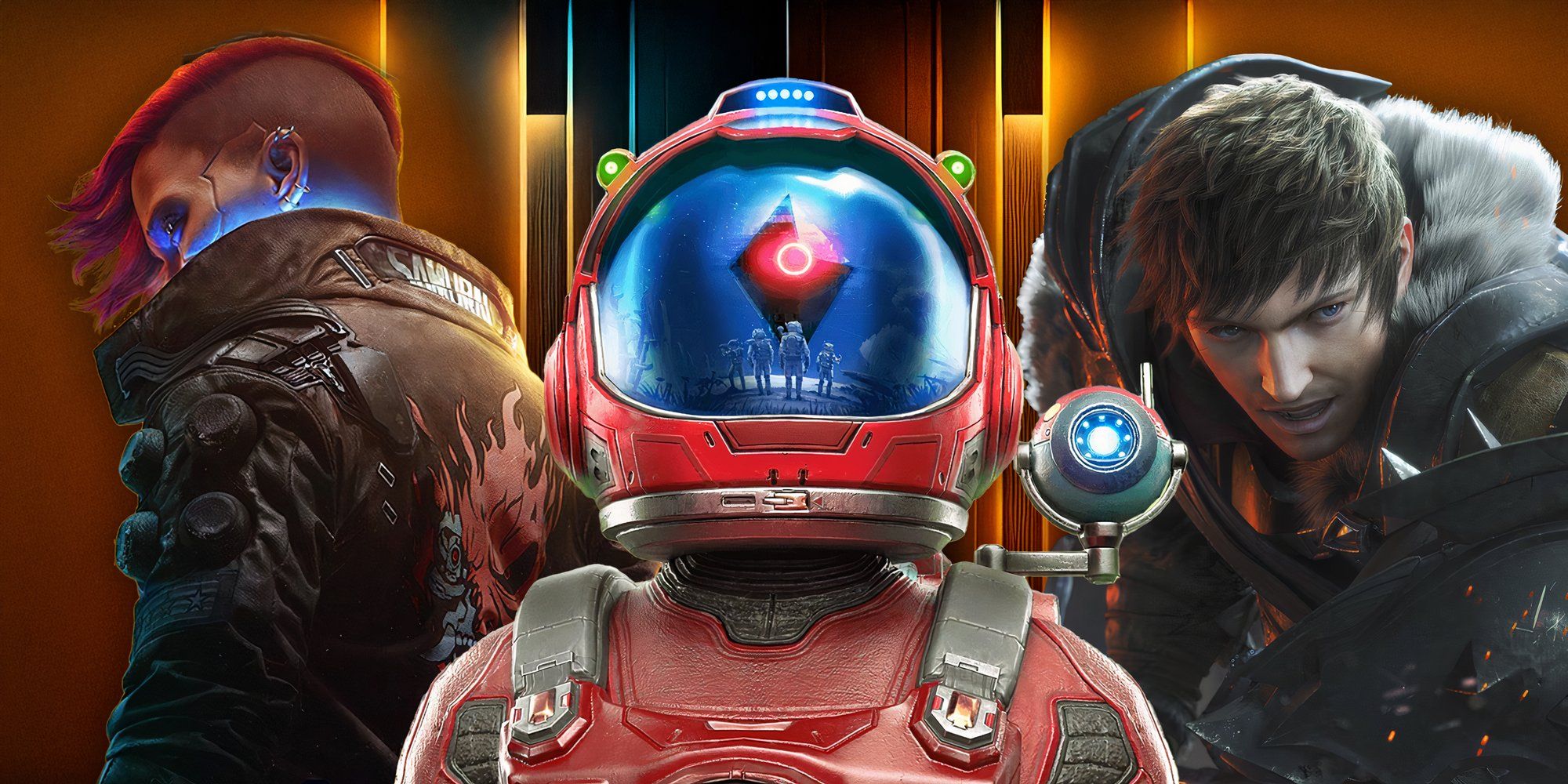
3 Cyberpunk 2077
Wake Up, Samurai! We Have a Game to Fix

Cyberpunk 2077 has been one of the most hyper-hyped games in the history of gaming. Riding on the success of The Witcher 3: Wild Hunt, CD Projekt Red had earned the public’s trust. Expectations were sky-high (and arguably impossible to meet), yet the game launched in an unacceptable state.
Its release is now regarded as one of the most disastrous in gaming history.
The game was nearly unplayable on all platforms except high-end PCs, to the point that it was pulled from digital storefronts for a time. Even if you managed to run it, constant bugs frequently pulled you out of the world—a world that already fell short of what players expected.
The publisher bit off more than it could chew, and it took years for the game to finally recover. But it eventually did, and in spectacular fashion.
With the release of the stellar expansion Phantom Liberty and the 2.0 update which brought a huge list of improvements and gameplay revamps Cyberpunk 2077 finally became what it was always meant to be.
It was a long journey, and one can hope that people have since become more skeptical of marketing hype, even from studios that have earned significant goodwill.
2 No Man’s Sky
Eventually, Somebody Got in That Sky

No Man’s Sky is the poster child for redemption arcs in gaming. The game was hyped to hell and back—especially by Sony, which wanted to make it one of its top exclusives—despite it being developed by a small team of just 15 people. Unfortunately, the team wasn’t equipped to handle that level of visibility, and the communication surrounding the game was catastrophically botched.
The result was an underwhelming survival/crafting game that lacked many of the features promised or hinted at over the years. People even created massive spreadsheets to track what was promised versus what was actually delivered, and the backlash reached unprecedented levels.
Hello Games responded to the scandal in the only correct way: they bunkered down, closed all their professional and personal social accounts, and got to work.
Since its release, No Man’s Sky has received a stunning number of free, gargantuan updates, transforming the game into something far beyond what was initially promised—all at no extra cost to players. Years later, NMS is now considered one of the golden children of its genre and of gaming in general.
1 Final Fantasy XIV
Back to the Drawing Board

What could top this list if not a game that had to be nuked from Orbit to be salvaged?
In any creative process, one of the most difficult tasks is to “kill your darlings”—to scrap what you love if it simply doesn’t work. Final Fantasy XIV took that concept to the extreme by scrapping the entire game.
The original version of Final Fantasy XIV was a pain for several reasons. It was laggy, required a powerful computer to run, and lacked many features that should be standard in any MMO—such as an auction house or a storage system. It had no mounts, featured numerous copy-pasted environments, and the gameplay was a relentless grind fest. And those were just the most blatant issues; there was much more.
Square Enix decided to adopt the nuclear option and remade the game from scratch. Three years after the release of version 1.0, Final Fantasy XIV: A Realm Reborn was launched in spectacular fashion. A stunning cinematic video set the stage for the new lore, depicting how Bahamut unleashed catastrophe on the land—destroying or transforming much of the continent, which then had to be rebuilt.
Final Fantasy XIV: A Realm Reborn is now regarded as one of the best MMORPGs ever, and it continues to thrive more than a decade later, with new expansions further extending its longevity and gameplay. All the issues of the original game have been resolved, and the community remains vibrant to this day.
If you’re ever forced to kill your darlings, make it spectacular.

NEXT
11 Badly Reviewed Multiplayer Games That Are Actually Pretty Good
Convince your friends that these unfortunate games are actually better than the reviews suggest.